
Key Takeaways
- Pipe relining repairs your damaged pipe from the inside. No excavation. No destruction. Your property stays exactly as it is.
- Pipe replacement works, but digging up a pipe under a driveway or garden adds serious cost on top of the pipe work itself.
- For most Adelaide homes, relining is the better deal overall. Not just cheaper in many cases, but faster and far less disruptive.
- Never let a plumber quote you for either option without running a CCTV camera through the pipe first. If they skip that step, that’s your cue to call someone else.
- A fully collapsed pipe can’t be relined. The camera will tell you if that’s what you’re dealing with.
- Both options last decades. You’re not sacrificing longevity by choosing relining over replacement.
First, Let’s Talk About Why Adelaide Pipes Fail
I want you to picture the streets of Norwood or Unley or Burnside on a summer afternoon. Big trees, old homes, beautiful gardens. Lovely to look at. And underneath all of it, clay pipes that were laid down before colour television existed, slowly losing the battle against root systems that have had 50 years to grow.
That’s the reality for a significant chunk of Adelaide’s housing stock. Clay was the go-to pipe material for decades. It did its job. But it cracks as the ground shifts, joints loosen over time, and tree roots, which are just doing what roots do, find every gap and push through. Once they’re in, the damage compounds quickly.
Adelaide’s seasons don’t make things easier either. Long dry summers shrink the soil. Everything settles and shifts a little. Then the rains arrive and pipes that were already stressed take on more pressure. Slow draining water, toilets that gurgle when you haven’t flushed them, a patch of lawn that’s inexplicably lush in one spot. These aren’t quirks. These are symptoms.
What Pipe Relining Actually Is
Right, so here’s the bit most people haven’t heard before.
Pipe relining fixes your damaged pipe without anyone needing to dig up your yard. The plumber clears the pipe out first using a high-pressure water jet, then sends a camera through to see exactly what’s happening in there. From there, a flexible liner coated in epoxy resin gets fed into the damaged section. It’s inflated so it presses right up against the pipe walls, and then it cures. Hardens. Sets solid.
What you’re left with is essentially a brand new pipe sitting snugly inside the old one. Smooth, seamless, and properly sealed.
Your driveway doesn’t get touched. Your garden stays where it is. If the pipe runs under your kitchen or laundry, nobody’s taking a jackhammer to your floor. The whole thing is usually done within a day and honestly, most homeowners are surprised by how undramatic the whole process is.
What Pipe Replacement Actually Is
This one people understand more intuitively. The old pipe gets dug up and a new one goes in. Simple enough in theory.
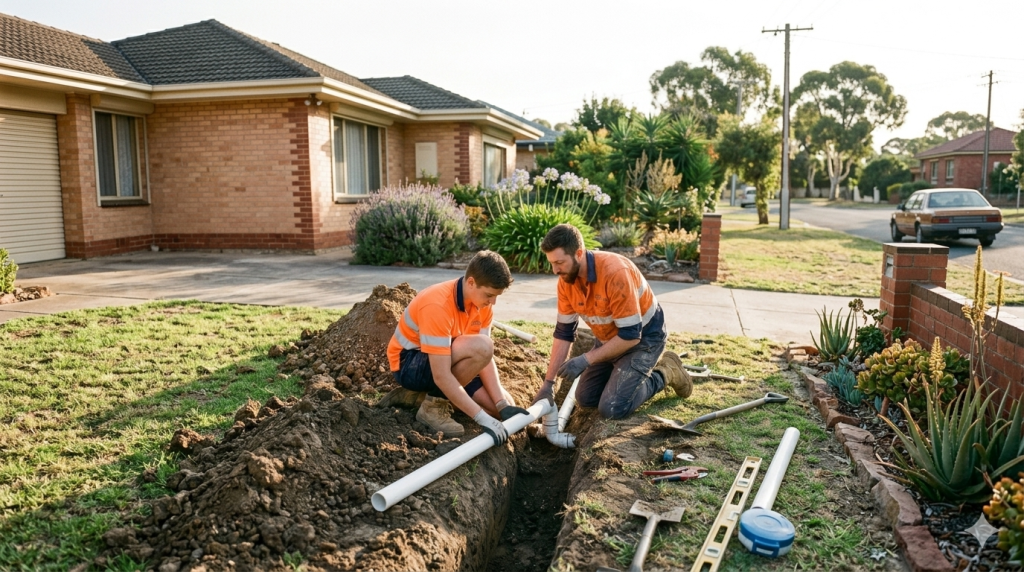
The issue is everything that comes with the digging. If your pipe runs under a concrete driveway, that concrete has to come up and then go back down again. If it runs through a garden bed, through pavers, under a deck, all of that gets disturbed. The pipe cost per metre is one thing. But excavation, labour, and then restoring whatever surface got torn apart during the job is a completely different line on the quote.
I’ve talked to Adelaide homeowners who were quoted for full pipe replacement, got a second opinion that included relining as an option, and ended up saving thousands. Not a small percentage. Thousands. Same problem fixed. Completely different price tag.
So How Do They Actually Compare?
On cost, pipe relining in Adelaide generally runs between $500 and $1,500 per metre. The variation depends on pipe diameter, how deep it sits, and how easy it is to access. Pipe replacement can hit similar per-metre figures for the pipe itself, but stack the excavation and reinstatement costs on top and the total bill climbs steeply.
On time, relining wraps up in hours most days. Replacement with excavation and surface restoration can stretch across multiple days depending on complexity.
On how long each solution lasts, both are genuinely long-term. A well-done relining job is rated at 50 years or more. New PVC from a replacement sits in a similar range. So if someone implies that relining is somehow a shortcut or a temporary patch, that’s not accurate.
One thing I’ll flag honestly. The resin liner does add a small amount of thickness to the inside wall of the pipe, which slightly reduces the internal diameter. In almost every residential situation in Adelaide this has zero practical impact on water flow. But if you’re working with a particularly narrow pipe already, it’s a question worth asking before work starts.
When Relining Is the Obvious Choice
Root damage, cracked joints, fractures that haven’t progressed to full collapse. Relining handles all of these well. It’s particularly suited to Adelaide homes where the pipes run under things you’d rather not disturb. Mature gardens, tiled floors, concrete paths, heritage structures where excavation triggers its own set of approvals and headaches.
If the thought of a bobcat rolling across your front garden makes you wince, relining was basically invented for you.
When You Actually Need Replacement
A fully collapsed pipe is the clearest answer here. If there’s no structural integrity left, there’s nothing for the liner to grip onto and relining simply won’t work. Similarly, if the damage has spread across a long section and the pipe is compromised beyond what a liner can reasonably address, replacement is the honest answer.
A CCTV inspection will show you exactly which situation you’re in. You’ll see the footage yourself. And a good plumber will explain what it means without pushing you toward the more expensive option unless that’s genuinely what the pipe needs.
FAQs
How long will pipe relining actually last in my Adelaide home?
A properly installed job lasts 50 years or more. The epoxy resin cures into a hard, seamless surface with no joints, which is actually more resistant to future root intrusion than most original pipe materials. Roots need a gap to get started. Relining eliminates those gaps.
My house is from the 1960s. Will relining even work on pipes that old?
Most likely yes. Older homes with clay or cast iron pipes are actually among the most common candidates for relining in Adelaide. The pipe material doesn’t need to be in great shape for relining to work, just intact enough to hold a liner. A camera inspection will confirm this.
Will the relining affect how my taps and shower flow?
Practically speaking, no. There’s a minor reduction in internal diameter from the liner, but the smooth resin surface actually allows water to move more freely than through a corroded or root-blocked pipe. Most homeowners don’t notice any change at all.
How many days will I be without proper drainage?
For most relining jobs, you’re looking at a single day. Sometimes less. Pipe replacement with excavation and surface work often runs across several days, and that’s before you factor in things like waiting for concrete to cure.
Is there any paperwork involved for relining in Adelaide?
Usually not. Because relining doesn’t involve excavation, it typically avoids the council approvals that can come into play when digging near heritage properties, public footpaths, or shared boundaries. Your plumber can confirm specifics for your property.
What if my pipe has already collapsed completely?
Then relining isn’t an option and replacement is the way forward. The camera will show this before any work begins, which is exactly why insisting on that inspection first matters so much. You want to know what you’re actually dealing with, not find out halfway through a job.