
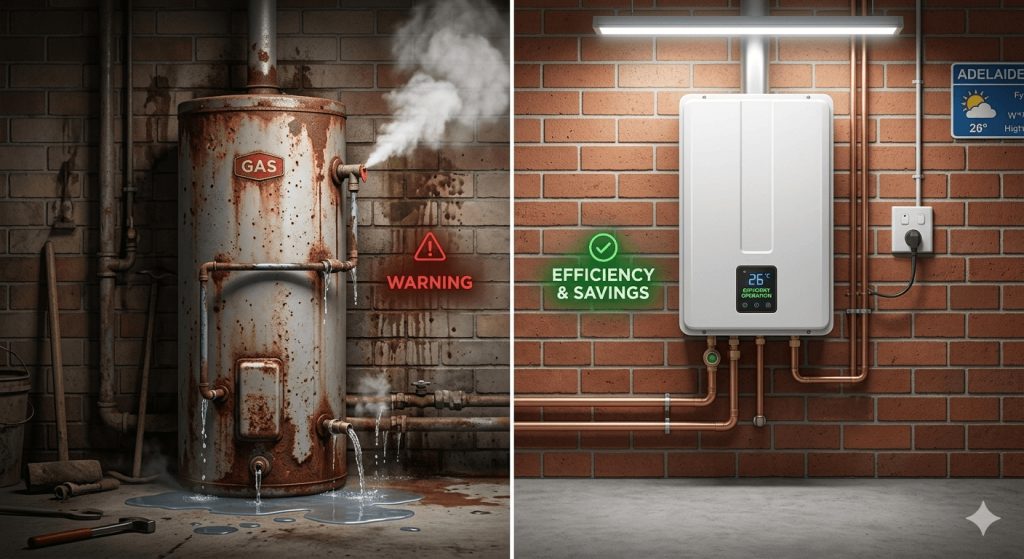
Key Takeaways
- Pressure build-up inside an ageing tank is the number one reason hot water systems fail dangerously, and it usually comes down to one small valve that nobody ever checks.
- An explosion does not just mean no hot water. We are talking flooding, structural damage, fire risk, and potential injury.
- Your system will almost always warn you before it gives up. Most homeowners just do not know what to look for.
- Winter cold puts enormous extra strain on older systems and pipes, making failures far more likely during the cooler months.
- Scheduling a hot water replacement before disaster strikes will always cost you less than cleaning up after one.
- If your system is pushing 10 years or older and has been playing up, now is the time to do something about it.
Could Your Hot Water System Actually Be Dangerous?
It is not a question most homeowners think to ask. The system heats water, it has done it for years, and as long as something warm comes out of the tap, nobody gives it a second thought.
But here is the thing. Hot water systems are pressurised appliances. They run every single day. And like any appliance that works under constant heat and pressure, they have a breaking point.
When they reach it without any maintenance or timely hot water replacement, the consequences go well beyond an inconvenient cold shower. We are talking about flooding, structural damage, and in some cases, injuries that could have been completely avoided.
So yes, an ageing, neglected hot water system can be dangerous. Here is everything you need to know.
So Why Would a Hot Water System Actually Explode?
Think of your hot water system as a sealed pressure cooker that runs all day, every day. Inside that tank, water is being constantly heated, which naturally builds up pressure. There is a small component called the Temperature and Pressure Relief valve, or TPR valve, whose entire job is to let that pressure escape safely before it gets dangerous.
When that valve works, everything is fine. When it does not, you have a serious problem.
Here are the most common reasons things go wrong:
- The TPR valve has corroded or seized and can no longer open when pressure spikes
- Sediment has caked up at the bottom of the tank, creating hot spots that overheat sections of the system
- The tank walls have rusted from the inside out over years of use, weakening the structure
- Someone has cranked the thermostat too high, pushing temperatures well past the safe range
- The pressure relief outlet pipe is blocked, so even if the valve opens, the pressure has nowhere to go
Once pressure has no escape route, it keeps climbing. The tank walls can only take so much. When they give way, it is not just water you are dealing with. It is scalding steam, pressurised water, and bits of metal releasing all at once. Walls crack. Ceilings come down. Gas systems can catch fire.
Can Cold Weather Burst Hot Water Pipes?
Yes, it absolutely can. And this surprises a lot of people in Adelaide.
We tend to think of burst pipes as a problem for Canberra or somewhere up in the Snowy Mountains. But here is the reality. When temperatures dip overnight in the Adelaide Hills or during a proper cold snap, water sitting in exposed or uninsulated pipes can freeze. When water freezes, it expands. Pipes do not. So they split.
Beyond the freezing risk, cold weather quietly does other damage to your hot water system that most people never connect:
- Your tank has to work much harder to heat water that is arriving colder from the mains, which adds wear over time
- Older tanks go through constant expansion and contraction cycles in winter, which stresses already weakened metal
- The insulation around ageing tanks breaks down faster when it is constantly exposed to temperature swings
- Any pipe that already has minor corrosion is far more likely to fail when cold adds extra pressure to the mix
Winter in South Australia is genuinely one of the busiest times for hot water system call-outs. If your system is already on its last legs, a cold snap is often all it takes to push it over the edge. That is usually the moment people wish they had booked a hot water replacement a few months earlier.
Your System Is Probably Already Trying to Tell You Something
Hot water systems rarely fail out of nowhere. They usually give plenty of warning. The trouble is, most of us do not know what normal looks like, so we brush off the signs as quirks.
Here is what to look out for:
- Rumbling, popping, or banging sounds coming from the tank while it heats up
- Brown or rust-coloured water coming through your hot taps
- Puddles forming around the base of the tank, even if they seem tiny
- Hot water temperature that jumps around without you touching anything
- A TPR valve that constantly drips or one you have never seen tested
- Rust stains, corrosion, or any visible bulging on the outside of the tank
- A system that is 8 to 10 years old and has never had a professional look at it
One of these on its own is worth a phone call. Two or more together, and you really do not want to wait.
The Mess Left Behind When Things Go Wrong
People tend to focus on the explosion itself. But the aftermath is often what does the most financial damage.
Right after a failure:
- Scalding water and steam can cause serious burns to anyone standing nearby
- Metal fragments from a ruptured tank can travel several metres
- Gas system failures bring fire risk into the equation immediately
- Water can flood through walls and under floors faster than you expect
In the days and weeks after:
- Walls, flooring, and ceiling structures can be badly damaged
- Moisture trapped inside walls leads to mould that costs thousands to fix
- Water near switchboards or wiring creates an electrocution risk
- The total repair bill can easily reach five figures before you factor in the hot water replacement itself
On the insurance side, a lot of homeowners assume they are covered. Sometimes they are. But many policies have clauses around wear and tear. If an assessor decides the failure came from years of neglect rather than a sudden event, your payout can be reduced significantly or rejected entirely.
How to Make Sure This Never Happens at Your Place
None of this needs to be your story. A few basic habits will protect your home and your family:
- Test your TPR valve once a year. Flick the lever and check it moves freely and does not leak afterward. If it does either of those things wrong, get it replaced.
- Flush the tank annually to clear out the sediment sitting at the bottom.
- Keep your thermostat at 60 to 65 degrees Celsius. Anything above that is unnecessary and adds risk.
- Wrap exposed pipes before winter hits, especially if you have any running through unheated spaces.
- Get a professional to look at the system every couple of years. A quick inspection costs very little compared to what it prevents.
Find out how old your system is. If you bought your home and have no idea, a licensed plumber can figure it out in minutes.
FAQs
Q: Are hot water system explosions really that common?
Full explosions are not an everyday occurrence. But pressure-related failures, burst tanks, and flooded homes happen regularly. The conditions that cause an explosion are exactly the same ones behind those smaller failures.
Q: My system is solar. Does it have the same risks?
Yes. Solar systems that use a pressurised storage tank face the same pressure-related risks if the TPR valve is not maintained. The energy source does not change the physics.
Q: How long does a hot water replacement actually take?
For a standard swap, most jobs are done within two to three hours. If you call first thing in the morning, you can often have hot water again by lunch.
Q: I think my system is failing right now. Should I stay in the house?
If you can hear loud banging, see steam escaping constantly from the TPR valve, or smell gas anywhere near the system, do not hang around. Get out of that area of the house and call a licensed plumber straight away. Do not try to troubleshoot it yourself.
Q: Will my home insurance cover the damage from an explosion?
It really depends on your policy wording and what caused the failure. Sudden events tend to be covered. Failures that an assessor attributes to long-term neglect often are not. Read your PDS and call your insurer to understand exactly where you stand.
Q: I am not sure whether I need a full hot water replacement or just a repair. How do I decide?
A good plumber will give you an honest answer after looking at the age, condition, and nature of the fault. As a rough rule, if your system is over 10 years old and has more than one issue, replacement almost always works out cheaper over the next few years than chasing repairs.