
Key Takeaways
- PEX pipes are flexible, corrosion-resistant, and cheaper to install than copper
- Adelaide’s hot summers make PEX a strong performer in wall cavities and roof spaces
- Copper pipes in older homes often corrode or develop pinhole leaks over time
- A pipe replacement Adelaide job using PEX typically costs less in both materials and labour
- PEX should not be used in UV-exposed outdoor areas without protection
A few years back, if you asked a plumber what kind of pipe material should be used in your household, copper could very well have been the answer.
Times have changed.
Increasingly across Adelaide, residents are opting for PEX pipes when renovating bathrooms, kitchens, renovating aged piping systems, building extensions, etc. This doesn’t mean that copper is now some bad quality product. Many existing Adelaide households actually still utilize copper pipes that have served for decades.
The reason why is clear; people want plumbing products that work, that are affordable, and that fit the needs of modern homes.
People rarely consider the matter of plumbing until things start going awry. Suddenly, there’s a little stain on your ceiling because of a water leak. Or maybe you notice an unusual lack of water pressure in your shower. Maybe even your toilet suddenly breaks down due to some leak in the walls.
In such situations, many people realize that there are alternative materials they can use. One of them happens to be PEX.
But why has so many people chosen PEX? Let’s take a look
What Are PEX Pipes, Exactly?
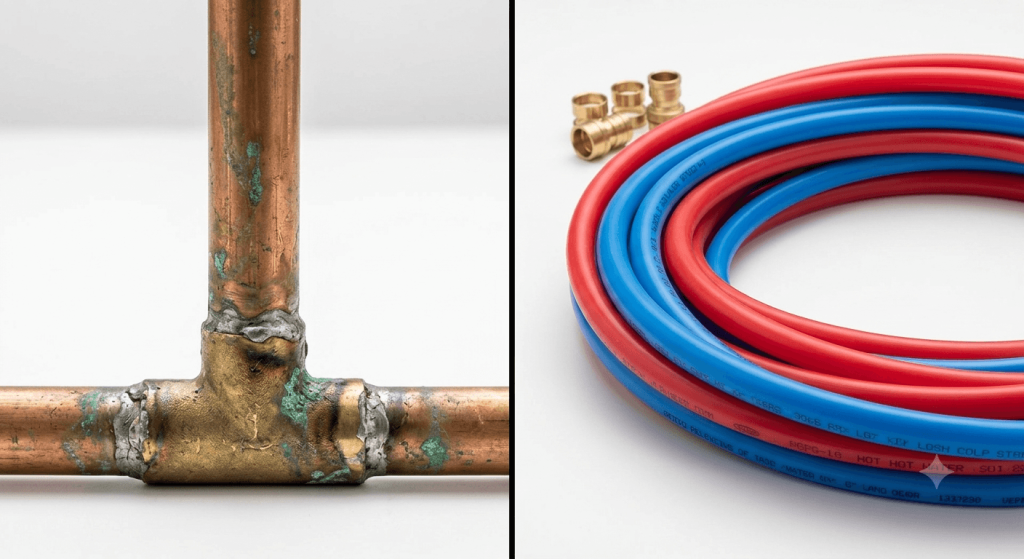
PEX stands for cross-linked polyethylene. It’s a flexible plastic tubing used in European homes since the 1970s and now common in Australian residential plumbing.
Unlike rigid copper, PEX bends around corners and through wall cavities without needing multiple fittings. That flexibility speeds up installation and reduces the number of joints where leaks can develop.
Why Adelaide Homes Suit PEX Well
Adelaide summers push temperatures high inside wall cavities and roof spaces. Copper expands and contracts with heat, stressing joints over time. That’s one reason older Adelaide homes develop slow leaks that go unnoticed until visible water damage appears.
PEX handles thermal movement better. It expands slightly under heat and returns to shape without stressing connection points.
Copper vs PEX Pipes: A Practical Comparison
Both materials work. But when you look at real-world costs and conditions, the comparison becomes pretty clear for most older Adelaide homes.
Cost
- Copper is more expensive as a raw material
- Installation takes longer due to soldering and rigid fitting requirements
- PEX pipe replacement Adelaide projects run cheaper on both materials and time
Durability
- Copper can last 50 years in ideal conditions but corrodes in slightly acidic water
- PEX carries a 25-year warranty and does not corrode
- Pinhole leaks are a known problem in aging copper systems
Installation
- Copper requires cutting, soldering, and precise alignment
- PEX can be snaked through existing cavities with far less disruption to walls
- For plumbing renovations in older homes, PEX means fewer access holes
Real-Life Example
A homeowner in Norwood had their plumber investigate a persistent damp smell near the laundry. Behind the wall were three pinhole leaks in a copper pipe original to the 1960s build.
Rather than patching it, they went with a full PEX replacement for the hot water supply lines. The job took one day, required fewer wall openings than copper would have, and came in around 30% cheaper than a like-for-like copper replacement. They left with a 25-year warranty on the new pipework.
Expert Tips From Adelaide Plumbers
- Check whether your home already has a manifold system. If it does, switching to PEX is straightforward
- Choose PEX-A over PEX-B where possible. It’s more flexible and handles tight bends without cracking
- Never run PEX in direct sunlight or exposed outdoor areas. UV degrades the material. Use copper or CPVC in those spots
- Always use proper transition fittings when connecting PEX to existing copper. Poor connections are a leading cause of leaks
- Ask about manifold-based installation during renovations. It lets you isolate individual lines for easy future repairs
Common Mistakes to Avoid
- Mixing materials without correct fittings: Copper and PEX expand at different rates. Wrong connectors lead to joint leaks within a few years
- Going with the cheapest installer: PEX is easier to work with, but poor installation still causes sagging runs and kinks
- Leaving corroded sections nearby: Replacing one leaking section while ignoring the rest is a short-term fix
- Skipping licensed plumbers: All plumbing work in South Australia requires a licensed tradesperson. DIY work is illegal and causes problems when selling
Not checking water quality: Adelaide’s town water is fine for PEX. If you’re on tank water, get it tested first
Conclusion
Copper served Australian homes well for generations, but for many Adelaide homeowners today, PEX pipes are simply the smarter option. Lower installation costs, no corrosion risk, and better performance under thermal stress make it a practical upgrade, especially in homes built before the 1990s.
The switch doesn’t have to be a full repipe either. Many plumbing upgrades Adelaide residents choose involve only the problem areas or hot water supply lines. Start there if a full replacement feels like too much.
Talk to a licensed Adelaide plumber, get a proper assessment, and make the call based on your home’s actual condition. One honest conversation could save you a lot of money and a lot of ceiling repairs down the track.
Frequently Asked Questions
1. Are PEX pipes safe for drinking water?
Yes. PEX pipes meeting Australian standards are safe for potable water. Look for WaterMark certification when your plumber sources materials.
2. How long do PEX pipes last?
Most carry a 25-year manufacturer warranty. Early European installations have been running for over 40 years with no major issues.
3. Can PEX handle hot water systems?
Yes. PEX is rated for hot water plumbing and widely used for hot water supply lines across Australia.
4. Is pipe replacement in Adelaide expensive?
It depends on scope. Targeted repairs are affordable. A full repipe costs more, but PEX consistently comes in cheaper than copper for equivalent work.
5. Can I combine PEX and copper in the same system?
Yes, with proper transition fittings. A licensed Adelaide plumber will know exactly what’s needed for a secure connection.
6. Does PEX cope with Adelaide’s summer heat?
Yes. PEX handles the temperature ranges Adelaide experiences well, including hot roof cavities during summer.
7. Do I need a licensed plumber for PEX installation in South Australia?
Yes. All residential plumbing must be done by a licensed plumber. DIY plumbing is illegal, voids insurance, and creates issues when selling your property.